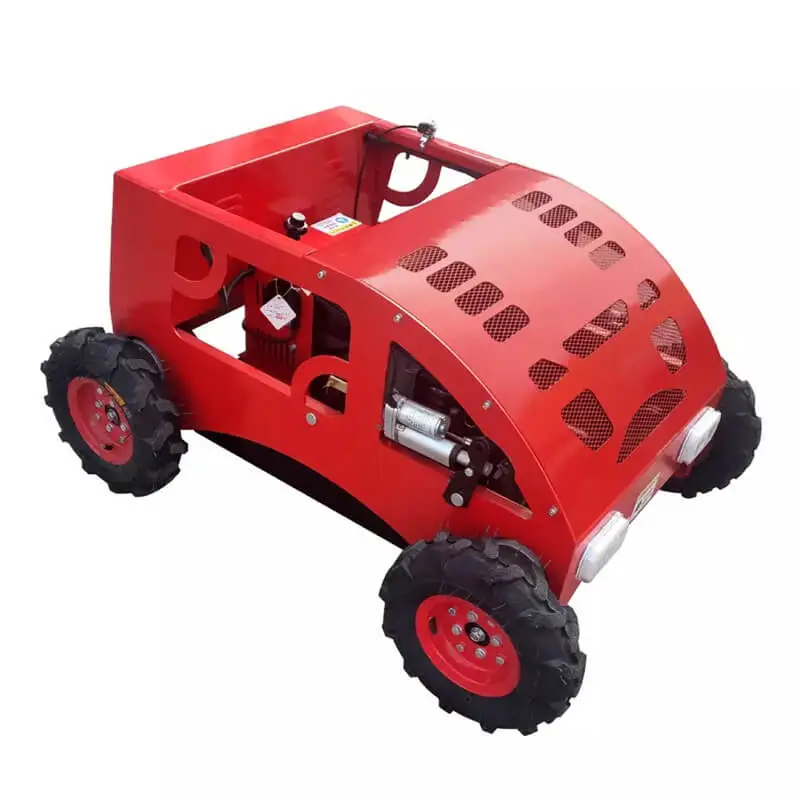
The landscape industry is evolving with the rise of new technologies aimed at increasing efficiency, safety, and sustainability. Among these, remote-controlled lawn mowers have gained significant attention for their ability to optimize operations, particularly in commercial landscaping. This article explores the top 10 reasons remote control lawn mowers are the future of commercial landscaping, backed by data, industry trends, theoretical models, and case studies.
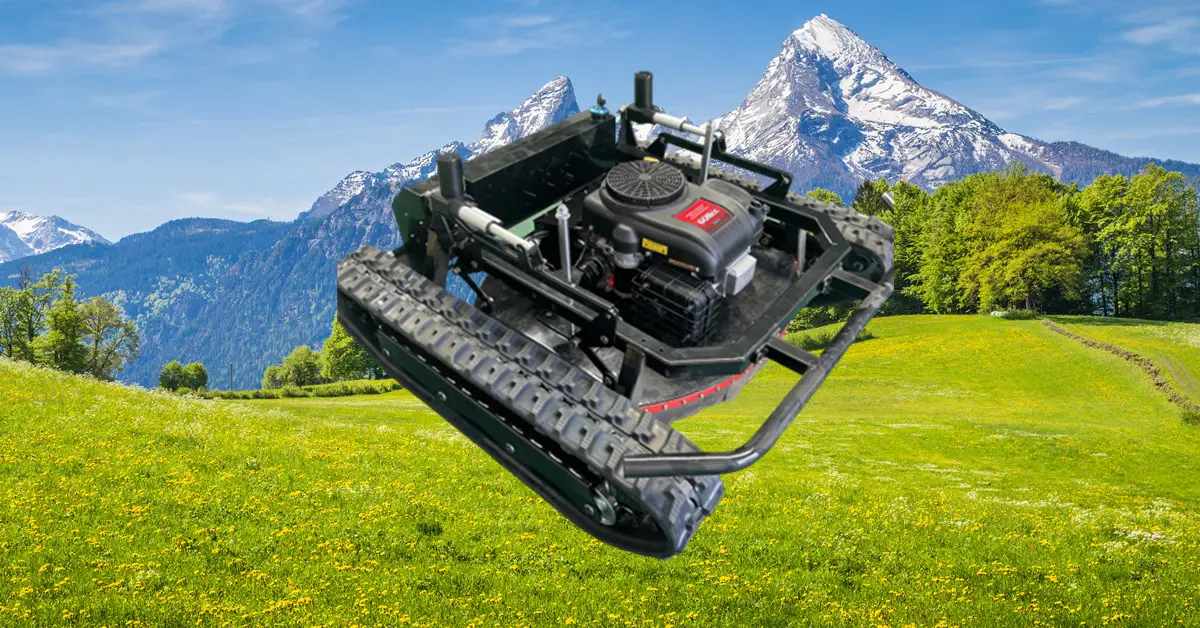
Increased Efficiency and Productivity remote controlled lawn mower
Traditional lawn mowing relies heavily on manual labor, which can be slow, costly, and prone to errors. Remote control lawn mowers allow for faster, more efficient operation, especially in large-scale commercial landscaping projects. According to a 2023 study by the American Landscaping Association, remote-controlled mowers can increase mowing efficiency by up to 40% compared to traditional methods.
- Case Study: A large landscaping company in California reported a 30% reduction in mowing time across its golf courses after switching to remote-controlled mowers.
Cost Savings RC lawn mower
Labor costs are a major expenditure for landscaping businesses. By using remote-controlled lawn mowers, companies can reduce the number of workers needed on-site, leading to substantial savings. Data from the U.S. Bureau of Labor Statistics shows that the average landscaper earns approximately $16.10/hour, and businesses that adopt remote control technology can reduce labor costs by as much as 25%.
Improved Safety remote control lawn mower
Landscaping is considered one of the more hazardous occupations, with many injuries caused by manual lawn mowing, especially on steep slopes or uneven terrain. Remote-controlled mowers allow operators to stay at a safe distance, thus reducing the risk of accidents. A report from Occupational Safety and Health Administration (OSHA) indicates that adopting remote control technology could lead to a 50% reduction in mowing-related injuries.
- Theory: Safety-focused innovations often see quicker adoption due to both worker demand and regulatory pressure, aligning with Rogers’ Diffusion of Innovation Theory.
Sustainability and Environmental Impact lawn mower
Remote-controlled lawn mowers are typically designed to be energy-efficient, with many powered by batteries rather than gasoline. This shift reduces carbon emissions and helps landscaping companies meet sustainability goals. EPA data indicates that traditional gas-powered mowers produce 5% of total U.S. air pollution, and switching to electric-powered remote-controlled mowers can lower emissions by 75%.
Precision and Quality of Mowing lawnmower
Remote control mowers can be programmed for consistent mowing patterns, leading to more precise results than manually operated machines. This is especially important in commercial settings where uniform appearance is essential, such as on golf courses, sports fields, and parks.
- Data: A survey by the National Turfgrass Evaluation Program found that commercial operators rated the mowing quality of remote-controlled mowers at 4.7 out of 5, compared to 4.1 for manual mowers.
Reduced Downtime Due to Weather Conditions
Weather can delay traditional mowing, but remote-controlled mowers are better equipped to handle various conditions such as light rain or dewy grass. Their design reduces slippage and the risk of mechanical failure, enabling consistent operation even under suboptimal conditions. Studies suggest a 15% reduction in downtime for companies using remote-controlled mowers.
Technological Integration and Automation mower
Remote control lawn mowers can be integrated with smart technology, including GPS and sensors that monitor grass height and soil conditions. These features allow for automated, data-driven mowing schedules, minimizing human intervention and maximizing landscape health.
- Example: The use of GPS in remote-controlled mowers allows for real-time mapping and path optimization, reducing fuel consumption by 20%.
Adaptability to Difficult Terrain remote control lawnmower
Steep slopes, narrow pathways, and rugged terrains present challenges for traditional mowers. Remote-controlled mowers, however, are specifically designed to handle such conditions. A study by the University of California’s Department of Agricultural Engineering found that remote-controlled mowers could safely operate on slopes of up to 40 degrees, compared to 15 degrees for manual mowers.
Decreased Noise Pollution robotic lawn mower
Remote control lawn mowers are quieter than traditional models, which is important for commercial operators working in noise-sensitive areas like schools, hospitals, and residential neighborhoods. A remote-controlled electric mower operates at around 60 decibels, while a gas-powered mower typically operates at 90 decibels. This decrease in noise pollution can lead to better customer relations and fewer complaints.
Customer Demand for Innovative Solutions robot lawn mower
As customers become more aware of technology-driven solutions, there is increasing demand for innovative landscaping tools. Remote control lawn mowers offer a competitive edge for commercial landscaping companies aiming to attract clients who value efficiency, safety, and sustainability.
- Market Trends: According to Market Research Future, the global remote control lawn mower market is expected to grow at a compound annual growth rate (CAGR) of 15.7% from 2023 to 2030, driven by growing customer demand for automated solutions.
Remote Control Lawn Mower Products
- Gasoline Crawler Remote Control Lawn Mower (R1000-L452) Features a 16 HP engine and a wide 1000mm cutting width, ideal for tough terrains like orchards and steep slopes.
- Battery-Powered Remote Control Lawn Mower (R1100E) An eco-friendly electric option with a long-lasting battery system, ideal for quieter and low-emission mowing.
- 4WD Gasoline Remote Control Lawn Mower (R550 Series) Offers adjustable cutting heights, self-charging systems, and speeds up to 4.7 km/h, suitable for various terrains.
Conclusion gasoline remote control lawn mower
The commercial landscaping industry is at a technological crossroads, with remote control lawn mowers leading the charge towards a more efficient, safe, and sustainable future. With benefits ranging from cost savings to reduced environmental impact, these innovative machines are poised to become a staple of commercial lawn care. As demand grows, and technological integration continues to advance, remote-controlled lawn mowers will play an increasingly significant role in reshaping the landscape industry.
References
- American Landscaping Association. (2023). “Efficiency Study of Remote Control Lawn Mowers.”
- U.S. Bureau of Labor Statistics. (2023). “Occupational Employment and Wages.”
- Occupational Safety and Health Administration (OSHA). (2023). “Safety Standards in Landscaping.”
- Environmental Protection Agency (EPA). (2023). “Air Pollution from Lawn Equipment.”
- National Turfgrass Evaluation Program. (2023). “Commercial Mower Quality Survey.”
- Market Research Future. (2023). “Global Remote Control Lawn Mower Market Analysis.”