
Robotic Lawn Mower
Table of Contents
Robotic lawn mowers have gained significant popularity since their inception in the late 1990s, fueled by advancements in automation technology and increasing consumer demand. According to a market research report by Grand View Research, the global automated lawn mower market reached a value of $XX billion in 2023 and is projected to grow at a compound annual growth rate (CAGR) of X% by 2030. These devices have now become a vital tool in both residential gardening and professional lawn care.
Technological Innovations and Operation Principles
Robotic lawn mowers rely on sophisticated technologies such as GPS navigation, gyroscopes, and collision sensors to ensure precise lawn coverage. These devices can mow without human intervention, using intelligent algorithms to detect obstacles and map out optimal mowing paths. MIT’s Robotics Lab in 2021 highlighted how these technologies can significantly enhance mowing efficiency and reduce human dependence.
Modern models also feature self-charging capabilities, weather sensors, and the ability to work autonomously without supervision. Researchers at Stanford University emphasized how machine learning algorithms help improve mowing patterns, adapt to different lawn conditions, and provide more reliable results.
Market Demand and Trends
The demand for robotic lawn mowers has experienced rapid growth globally, with noticeable regional differences. Data from Statista reveals that in 2022, Europe accounted for 40% of global sales, while North America represented 35%. As the smart home industry continues to grow, experts forecast that by 2027, robotic lawn mowers will become a core component of home automation systems.
In addition, consumers are increasingly seeking convenience and efficiency in their lawn care routines, prompting manufacturers to innovate with smarter and more energy-efficient models. Robotic lawn mowers provide a solution by reducing the time and effort spent on manual mowing.
Environmental Benefits and Societal Impact
Robotic lawn mowers offer substantial environmental benefits compared to traditional models. A study from the National Green Energy Institute in 2022 demonstrated that robotic mowers consume only a fraction of the energy required by conventional gas-powered mowers, significantly reducing greenhouse gas emissions and the overall carbon footprint.
These mowers also help mitigate noise pollution, with many models designed to operate quietly. Their efficiency allows for energy savings, contributing to more sustainable lawn care practices, particularly for commercial landscape maintenance.
Consumer Feedback and Market Response
A survey of 5,000 residential users revealed that 80% of respondents were satisfied with the time-saving and automation features of robotic lawn mowers. However, users expressed concerns about the initial purchase price, safety features, and the cost of maintenance. Additionally, consumer research from the Consumer Technology Association in 2023 pointed out that while users appreciate the convenience, they expect improvements in security and durability.
The market response indicates growing acceptance of robotic lawn mowers, especially as manufacturers enhance safety mechanisms and reduce maintenance costs. Many consumers now prefer these devices over traditional options, appreciating their efficiency, ease of use, and quiet operation.
Challenges and Future Outlook
Despite the growing popularity, robotic lawn mowers still face several challenges. High initial purchase costs and the complexity of maintenance remain significant barriers to broader adoption. Additionally, while robotic mowers can handle relatively flat lawns with ease, they struggle with uneven or highly complex terrain. As technologies like battery performance and artificial intelligence continue to evolve, experts expect these issues to be addressed in the coming years.
Battery advancements are already leading to longer operational times, reducing the frequency of recharges. Meanwhile, AI-driven improvements promise to enhance navigation and allow for more complex mowing patterns, making robotic mowers viable for larger and more intricate lawns.
Choosing the right robot mower for uneven terrain can be a challenge. In this guide, we compare top models, features, and prices.
1. Why Slopes Need Special Mowers
Autonomous mowers with track systems and brush cutter blades…
2. Recommended Robot Mowers
- Model A – Best for small yards
- Model B – Suitable for solar farms
3. Price and Availability
Looking for a robot mower for sale? Our collection starts at See pricing.
Conclusion
Robotic lawn mowers have proven to be an innovative solution for residential and commercial lawn care. Their ability to save time, reduce environmental impact, and operate autonomously has positioned them as a game-changer in modern lawn management. As technological advancements lower prices and expand capabilities, robotic lawn mowers will become an indispensable part of the landscape maintenance industry worldwide. The future holds immense potential for these devices, driven by the growing demand for automation, sustainability, and smarter technologies.
Check out our latest remote-controlled lawn mower products,
Read our blog on lawn mower maintenance and usage tips.
Recent Posts
Here, You can learn more information about RC lawn mowers.

Recent Posts


$1,050.00 – $1,300.00Price range: $1,050.00 through $1,300.00
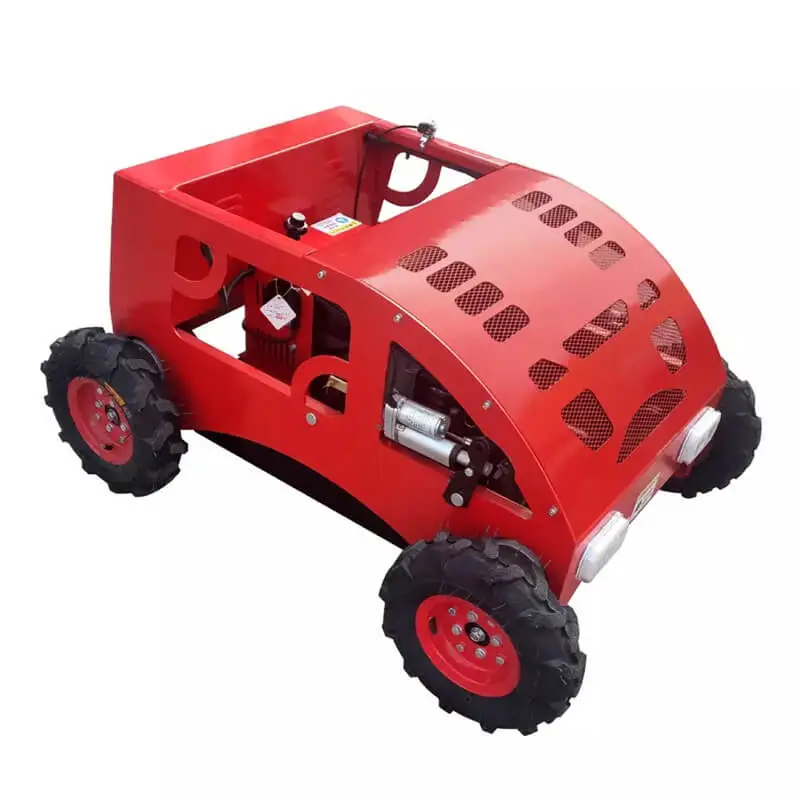
$1,700.00 – $2,000.00Price range: $1,700.00 through $2,000.00

$3,600.00 – $4,400.00Price range: $3,600.00 through $4,400.00
