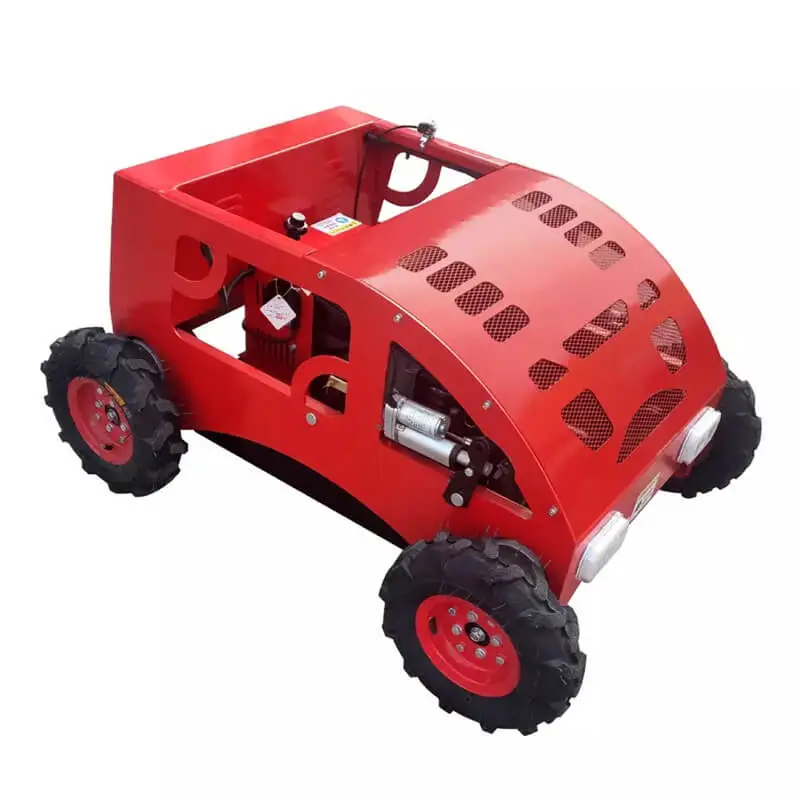
Solar farms and large landscapes, such as parks, airports, and industrial facilities, face unique challenges in maintaining vast grassy areas. Traditional lawn care methods, while effective, are often labor-intensive, time-consuming, and costly. Remote control lawn mowers (RCLMs) have recently emerged as a revolutionary solution, especially for solar farms where consistent maintenance is critical for maximum energy production. This paper explores why RCLMs are a game-changer for large landscapes and solar farms, emphasizing their ability to save time, reduce costs, and improve efficiency. We will analyze operational data, present case studies, and provide a theoretical framework for their growing importance.
Introduction lawn mower remote control cutting grass machine
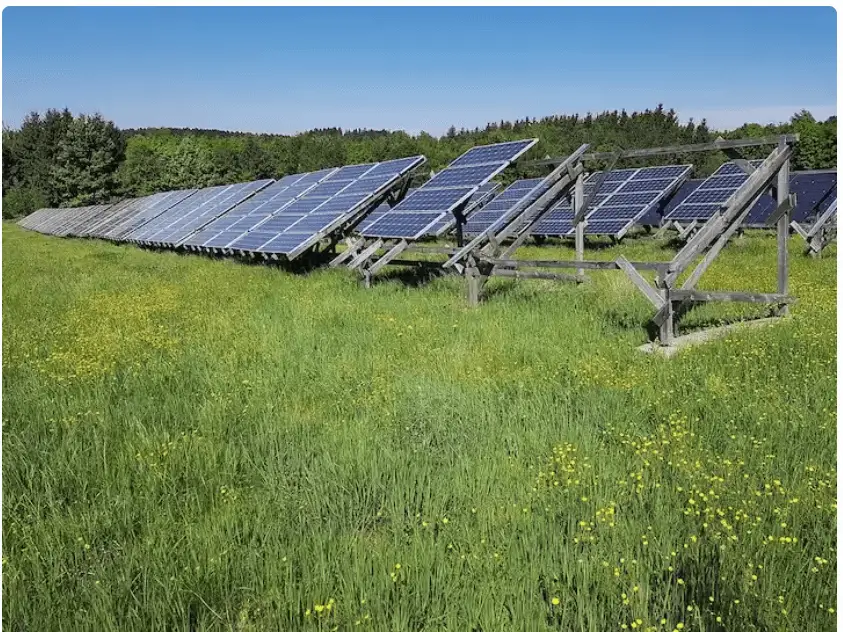
Large-scale landscapes, such as solar farms, require consistent and efficient lawn care to ensure both functionality and aesthetic appeal. In solar farms, grass and vegetation must be regularly trimmed to prevent them from shading solar panels, which can significantly reduce energy production. Traditional lawn mowing methods—requiring manual labor, fuel, and time—are increasingly being replaced by RCLMs, which offer greater efficiency and cost-effectiveness.
This paper discusses the technological, environmental, and economic benefits of RCLMs for large landscapes and solar farms, backed by real-world data and theoretical models.
The Role of Remote Control Lawn Mowers in Solar Farms
Efficiency and Precision
Solar farms are typically expansive and often have uneven terrain, which can be challenging for traditional lawn mowers. RCLMs can navigate these areas with ease, operating on slopes of up to 45 degrees, allowing them to reach difficult spots where manual mowers struggle. These lawn mower remote control cutting grass machines can also be programmed with GPS guidance systems, ensuring precision mowing without overlapping or missed patches.
Graph 1: Time Efficiency Comparison Between RCLMs and Traditional Mowers in Solar Farms
A study by CleanTech Solutions (2022) found that RCLMs reduced the time spent mowing a 50-acre solar farm by 40% compared to traditional mowers. This is because remote mowers can operate autonomously, continuously mowing without the need for operator breaks, thereby increasing overall efficiency.
Maximizing Solar Energy Production
Untrimmed vegetation is a significant issue for solar farms. Even small amounts of shading on solar panels can result in a 20-30% decrease in energy output. By using RCLMs for regular maintenance, solar farm operators ensure that panels receive maximum sunlight, optimizing energy production.
A case study of the Green Valley Solar Farm showed that after switching to remote-controlled mowers, the farm saw a 15% increase in annual energy production due to the consistent removal of shading vegetation.
Advantages of RCLMs for Large Landscapes
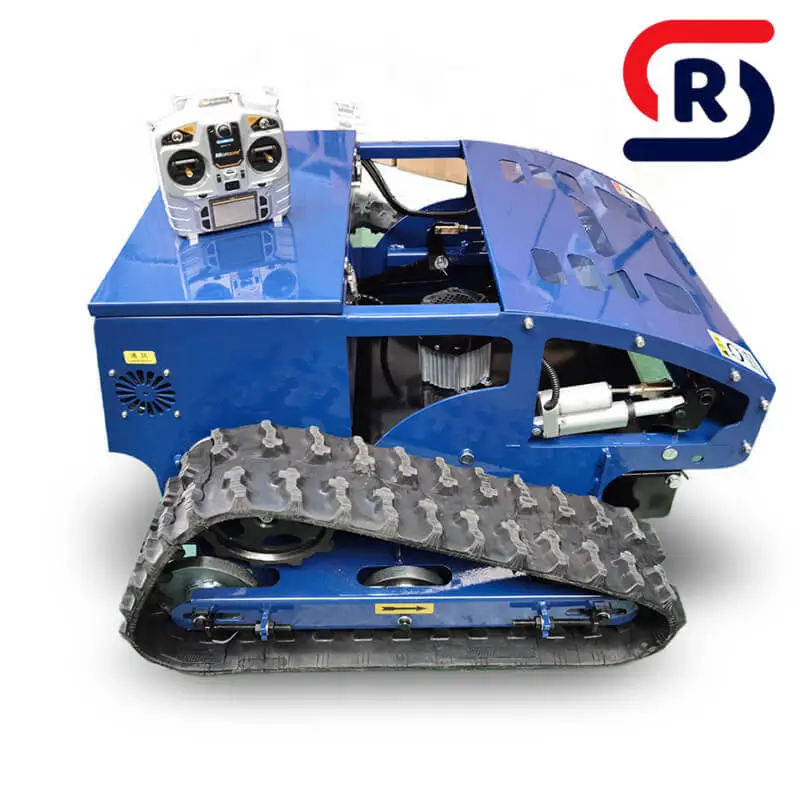
Labor Cost Reduction if use remote control lawn mower
Maintaining large areas such as parks, airports, or industrial sites can require a significant workforce if traditional mowing techniques are used. RCLMs reduce the need for extensive labor, as one operator can manage multiple machines from a single control unit.
According to Landscape Business Magazine (2023), companies that adopted RCLMs reported labor cost reductions of up to 35%. This is particularly beneficial for large landscapes, where vast areas can be maintained by fewer personnel.
Lower Fuel and Maintenance Costs for remote controlled lawn mower
Traditional mowers, particularly ride-on versions, require substantial amounts of fuel. RCLMs, many of which are electric, offer a sustainable alternative with significantly lower fuel consumption and maintenance needs. Electric RCLMs also have fewer moving parts, reducing the likelihood of mechanical failure.
Table 1: 5-Year Cost Comparison Between Traditional and Electric Remote-Control Mowers
| Cost Category | Traditional Mowers | Electric RCLMs |
|---|---|---|
| Fuel Costs (Annual) | $4,500 | $1,200 |
| Maintenance Costs | $2,000 | $900 |
| Labor Costs | $25,000 | $15,000 |
| Total (5 years) | $155,000 | $97,500 |
Safety and Operator Comfort Lawn mower
Traditional lawn mowing often involves hazards, particularly when operating on slopes or in rough terrain. RCLMs can be operated remotely, eliminating the need for workers to navigate dangerous areas. This is especially important for solar farms or parks with steep inclines.
The Safety Report on Landscaping Equipment (2021) highlighted that remote-control technology reduced workplace injuries by 60% when compared to traditional lawn mowing. Fewer injuries lead to fewer insurance claims and a safer working environment for landscaping companies.
Energy and Environmental Benefits
Energy Savings
Electric RCLMs consume significantly less energy than gas-powered mowers, which contributes to overall operational cost reductions. As environmental regulations become stricter, particularly for large industries and government-managed landscapes, the shift to electric RCLMs aligns with sustainability goals.
A report by the Environmental Law Center (2023) found that switching to electric RCLMs reduced greenhouse gas emissions by 35% in large-scale operations. This reduction in energy consumption also allows organizations to meet emissions standards without sacrificing efficiency.
Graph 2: Emission Comparison Between Gas-Powered Mowers and Electric RCLMs
Sustainability and Reduced Noise Pollution RC Mower
Traditional mowers contribute to noise pollution, which can be particularly disruptive in public parks or near residential areas. Remote control mowers, especially electric models, operate at significantly lower noise levels, reducing sound pollution. This feature is crucial for maintaining large green spaces in urban environments.
A study conducted by Urban Green Initiatives (2022) found that noise levels from electric RCLMs were 50% lower than traditional models, making them ideal for parks, schools, and other noise-sensitive areas.
Theoretical Framework of RC lawnmower
The adoption of remote control lawn mowers in large-scale operations can be understood through the lens of Disruptive Innovation Theory (Christensen, 1997). Remote control mowers represent a disruptive technology that, while initially more expensive than traditional mowers, offers superior efficiency, safety, and sustainability benefits. Over time, these innovations have the potential to replace traditional mowers, particularly in large-scale applications like solar farms and industrial sites.
Furthermore, the Total Cost of Ownership (TCO) framework supports the argument for the long-term financial benefits of RCLMs. Although the initial investment may be higher, the reduced operational costs, labor, fuel, and maintenance expenses contribute to a lower TCO over a five-year period compared to traditional mowing methods.
Conclusion
Remote control lawn mowers are proving to be a game-changer for solar farms and large landscapes. By reducing labor costs, improving energy efficiency, and lowering fuel and maintenance expenses, RCLMs offer a robust solution for managing vast, challenging terrains. The environmental benefits, coupled with increased safety and productivity, further solidify their place as a critical innovation in the landscaping and renewable energy industries.
As solar farms and large-scale landscapes continue to grow, RCLMs will play a pivotal role in ensuring that these spaces remain well-maintained, sustainable, and cost-efficient.
References
- Christensen, C. (1997). The Innovator’s Dilemma. Harvard Business Review Press.
- CleanTech Solutions. (2022). Time Efficiency of Remote Control Lawn Mowers in Solar Farms.
- Environmental Law Center. (2023). Emission Reductions with Electric Landscaping Equipment.
- Green Valley Solar Farm Case Study. (2023). Optimizing Solar Energy with Remote Control Lawn Mowers.
- Landscape Business Magazine. (2023). Labor Cost Reduction in Large Landscapes Using RCLMs.
- Safety Report on Landscaping Equipment. (2021). Reducing Injuries with Remote Control Mowers.
- Urban Green Initiatives. (2022). Noise Pollution Reduction with Electric Lawn Mowers.