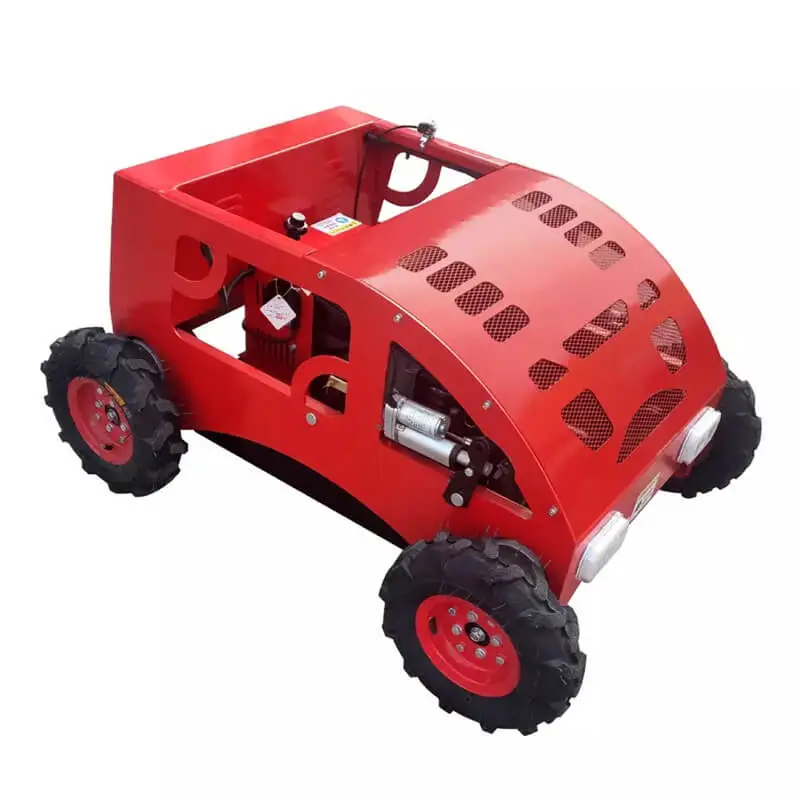
In “Gas vs Electric: Which Remote-Controlled Lawn Mower Fits Your Needs?” and “Power Systems Showdown: Analyzing the Pros and Cons of Gas and Electric Remote-Controlled Lawn Mowers”, we compare gas and electric mowers, helping you choose the best option based on power, efficiency, and your specific lawn care needs.
As the remote-controlled lawn mower market continues to grow, consumers now face a variety of power system options, with the two main types being gas-driven and electric-driven. Each system offers unique advantages and disadvantages, suited to different use cases and needs. This article provides a detailed comparison of these two types of mowers and offers recommendations based on user requirements.
Advantages and Disadvantages of Gas-Driven Remote-Controlled Lawn Mowers
Powerful Performance, Ideal for Complex Terrain
Gas-driven remote-controlled lawn mowers excel in power. These mowers typically come equipped with high-power engines, capable of handling complex terrains such as tall grass, steep slopes, and uneven land. For instance, mowers powered by Briggs & Stratton engines can deliver up to 10 horsepower per hour, making them perfect for large commercial areas, farms, or mountainous lawns. This powerful performance allows gas-powered remote control lawn mowers to perform exceptionally well in expansive, challenging landscapes.
Noisy Operation and Emission Pollution
However, gas-driven remote-controlled lawn mowers produce higher noise levels, often exceeding 95 decibels, which is about 20 decibels louder than electric models. In addition to the noise, gas mowers emit pollution, although modern engines have incorporated some eco-friendly technologies. Despite these advancements, they still cannot match the environmental performance of electric motors.
Advantages and Disadvantages of Electric Remote-Controlled Lawn Mowers
Environmentally Friendly, Low Noise, Ideal for Residential Use
Electric remote-controlled lawn mowers offer clear advantages in terms of environmental friendliness and quiet operation. The noise levels typically range from 60 to 70 decibels, much quieter than gas-powered models. They do not produce any emissions, meeting modern environmental standards, which makes them perfect for users who are concerned about reducing air pollution. Additionally, these mowers are easy to operate and require little maintenance, reducing long-term costs.
Limited Battery Life Restricts Usage Time
However, electric remote-controlled lawn mowers have one major limitation: their battery life. Most electric models last between 1 to 2 hours on a single charge, depending on the size and grass height of the lawn. For larger lawns or frequent use, users need to recharge the mower after each use, creating breaks in operation. For example, electric remote control lawn mowers typically require 4 to 6 hours to fully recharge, limiting their continuous working capacity.
Recommendations Based on Different User Needs
Large Lawns vs. Small Residential Lawns
For large lawns, such as commercial parks, farms, or golf courses, gas-driven remote-controlled lawn mowers are the best choice. Their powerful engines and longer running times enable them to quickly handle large areas, reducing both time and labor. For example, gas powered remote control lawn mowers can run for up to 5 to 6 hours, making them ideal for maintaining expansive green spaces.
For small residential lawns, electric remote-controlled lawn mowers are more suitable. They offer quiet operation and eco-friendliness, making them a perfect choice for suburban homes. Electric remote control lawn mowers can handle areas of 3,000 to 5,000 square feet, allowing homeowners to complete their lawn maintenance tasks without being disturbed by noise or emissions.
Commercial Use vs. Residential Use
In commercial settings, especially in environments requiring high efficiency and long operating hours, commercial remote-controlled lawn mowers often utilize gas power. These mowers offer strong performance and can run for extended periods, making them ideal for tasks that require rapid completion. For residential use, particularly in small yards or urban gardens, electric remote-controlled lawn mowers are more practical. They offer a quieter operation and meet the typical needs of homeowners for regular lawn care.
Conclusion
Ultimately, the choice between gas-driven remote-controlled lawn mowers and electric remote-controlled lawn mowers depends on the size of the lawn, user preferences, and the intended use. If you need to tackle large, complex terrains and don’t mind higher noise levels and emissions, gas-powered remote-controlled lawn mowers will be the better option. For small lawns and users seeking quieter, more environmentally friendly operation, electric remote-controlled lawn mowers are the ideal choice. By understanding the advantages and limitations of each power system, users can make the best decision based on their specific needs.