
China's domestic market demand is small, mainly export


$1,050.00 – $1,300.00Price range: $1,050.00 through $1,300.00
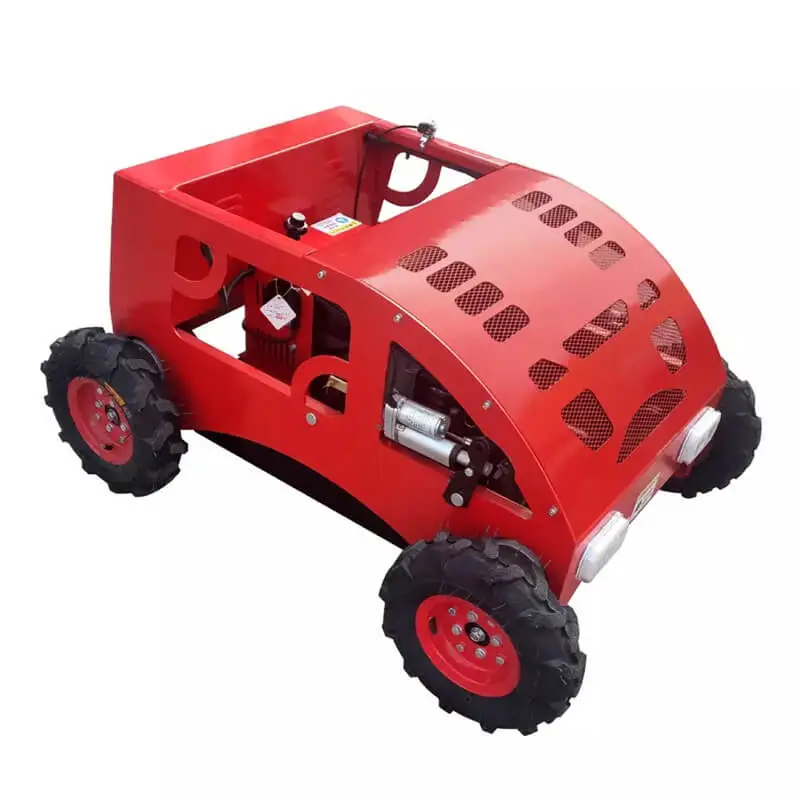
$1,700.00 – $2,000.00Price range: $1,700.00 through $2,000.00

$3,600.00 – $4,400.00Price range: $3,600.00 through $4,400.00
This is an in-depth analysis of the development status of the lawn mower industry, the industry’s upstream and downstream industry chains, the competitive landscape, and key enterprises, to minimize investment risks and operating costs of enterprises, and improve enterprise competitiveness; and use a variety of data Analyze technology to predict the development trend of the industry so that enterprises can seize market opportunities in time
Lawn Mower Review
A lawn mower, also known as a weeder, lawnmower, lawn trimmer, etc., is a machine used to trim lawns, vegetation, etc. Lawn mowers are highly popular and can be widely used in turf trimming in private gardens, public green spaces and professional lawns. The market demand accounts for a large proportion of the total demand for garden machinery products. Lawn mowers can be divided into gasoline power, AC power and DC power according to the power source.
Lawn mower classification and comparison
Power Type | Power source | Application Scenario | Advantage | Disadvantage |
| Gasoline Powered | Petrol Engine | Larger gardens and other outdoor operations | High power, portability, good cutting effect, strong battery life | Poor environmental protection, loud noise, high cost of use |
| AC power | External Power supply | Private garden, small yard work | Good environmental protection, strong battery life, high cost of use, low cost of use | poor portability |
| DC power class | Lead-acid batteries | Garden roads, garden courtyards and other outdoor operations | Good environmental performance, easy to use, low operating cost | Relatively high price, poor battery life |
| lithium battery | Garden roads, garden courtyards and other outdoor operations | High power, long battery life, intelligent (development direction) | Still need to invest in development costs |
Development History of the Global Lawn Mower Industry
Since Edwin Budding, an engineer in Gloucestershire, England, applied for the first patent for a lawnmower in 1830, the development of lawnmowers has roughly gone through three stages: the era of manpower mowing (1830-1880s), the era of motorization (1890s -1950s) and the era of intelligence (1960s to present).
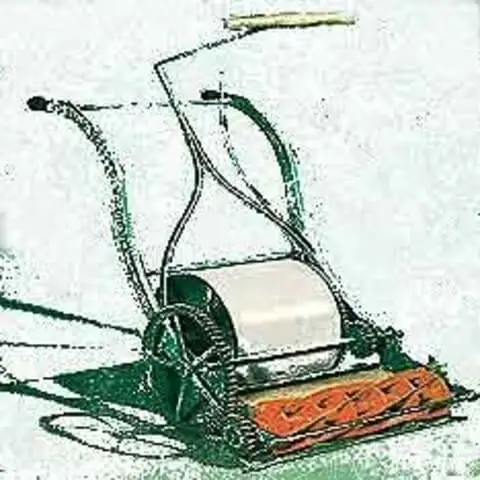
The era of manpower mowing (1830-1880s)
- The lawn mower was invented in 1830 by Edwin Beard Budding, an engineer from Stroud, Gloucestershire, England.
- 1842 Alexander Shanks invented the first mower that could be hitched to animals.
- 1859 The first chain-driven mower was invented by Thomas Green
- 1889 a mower with better rotary blades was patented. It was invented by John Albert Burr. It was less easily plugged up by lawn clippings.
The era of motorization (1890s -1950s)
- 1902 The first mower with an internal combustion gas engine burst onto the scene. This was the first ride-on mower to use a gas engine
- 1948 The rotary lawn mower with an enclosed deck, changed the game of push mowers.
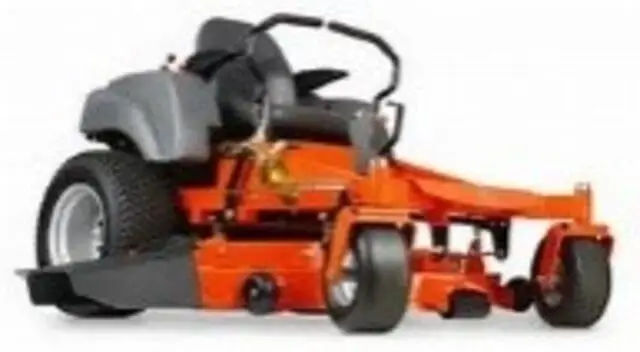
- 1955 The zero-turn mower was invented in 1955, but it wasn’t until Grasshopper Mower began manufacturing mowers in the 1960s, that the zero-turn burst onto the scene. Ever since then, Grasshopper has spent years perfecting the cut.

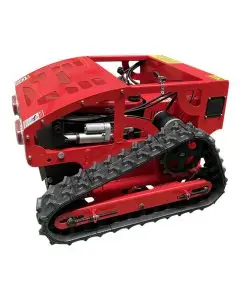
The era of intelligence (1960s to present)
- 1868, Amariah Hills of Hockanum, Connecticut, received the first US patent for a reel-type lawn mower. I
- 1970s In the early ‘70s, Grasshopper released the industry’s first swing-out dual-lever steering on a zero-turn mower.
- 1994 We saw the need for operators to have increased comfort, so in 1994, Grasshopper released the ergonomic Ultimate Operator Station with you in mind. So you could have the ultimate comfort on #MowDay, without wondering why you bought so much land.
- 2004 The PowerFold® Electric Deck lift was created, allowing the operator to lift the mowing deck and control cutting height with one touch of a button. But we weren’t done there, the best part is that there is no heavy lifting involved.
- 2005 Grasshopper released the industry’s first PowerTilt™ that allows the operator to easily empty the collection container from the seat.
- 2009 Rear discharge decks for the FrontMount™ and MidMount™ mowers were implemented to move clippings out the back of the deck. This allowed for trimming on both sides of the deck for a cleaner operation, just like mulching and power vac collection. Let’s be honest, no one wants to deal with discharge, but since we have to, we figured we’d make it easy.
Lawn mower industry chain
From the perspective of the lawn mower industry chain, it is mainly divided into two supply chains: fuel lawn mowers and electric lawn mowers. Among them, the upstream of fuel lawn mowers is mainly the engine, the upstream of electric lawn mowers is mainly batteries; the midstream is related brands and foundries of lawn mowers; the downstream is sales channels, including supermarket retailers, distributors and online sales channels
Upstream
- Gasoline: Engine and other hardware and electrical materials
- Batteries and other hardware and electrical materials
Middle reaches
- Foundry
- Brand Owner
Downstream
- Supermarket Retailer
- Dealer
- E-commerce sales channels
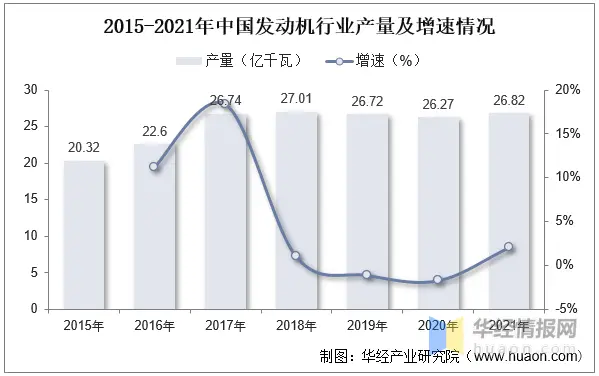
With the continuous development of my country’s economic strength and industrial level in recent years, my country’s engine industry has gradually matured. According to data, my country’s engine output has remained basically stable in recent years, and the output in 2021 will be 2,682,065,000 kilowatts, a year-on-year increase of 2.1%.
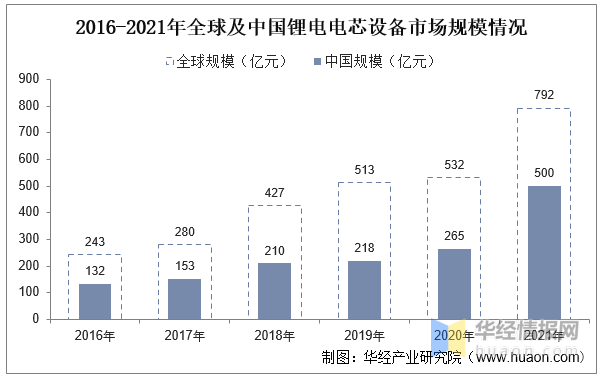
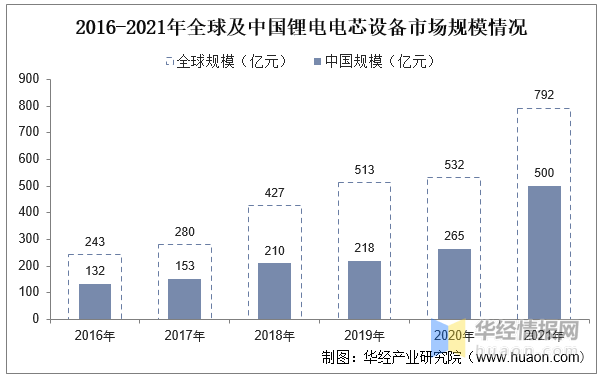
The scale of the lithium battery cell equipment market continues to grow, and China has already occupied half of the global market. According to relevant statistics, the global lithium battery cell equipment market size in 2021 will be 79.2 billion yuan, of which China’s lithium battery cell equipment scale will be 50 billion yuan, accounting for 63.13%
Analysis of the status quo of the lawn mower industry
Global Market Status
From the perspective of the global lawn mower market size, according to statistics, the global lawn mower industry market size will reach US$31.8 billion in 2021, a year-on-year increase of 5.65%. It is estimated that the market size will reach 44.1 billion yuan in 2027, with a CAGR of 5.6%.
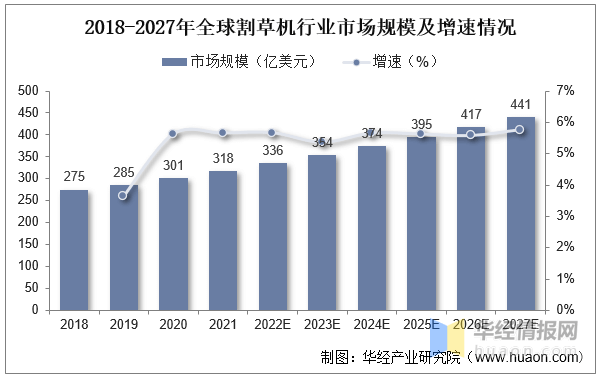
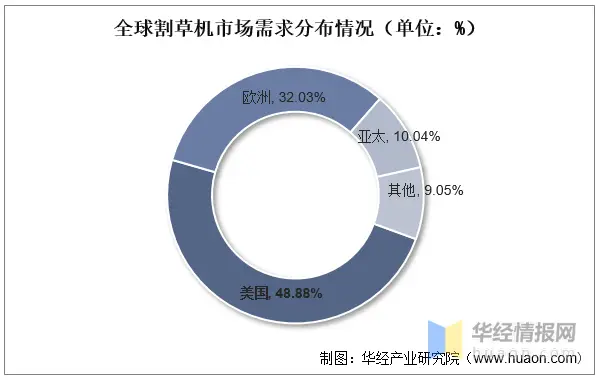
From the perspective of market size distribution, the domestic market demand for lawn mowers is small, and self-owned brand products are mainly exported. At present, 80% of the global demand for lawn mowers is in the United States and Europe.
China's export situation
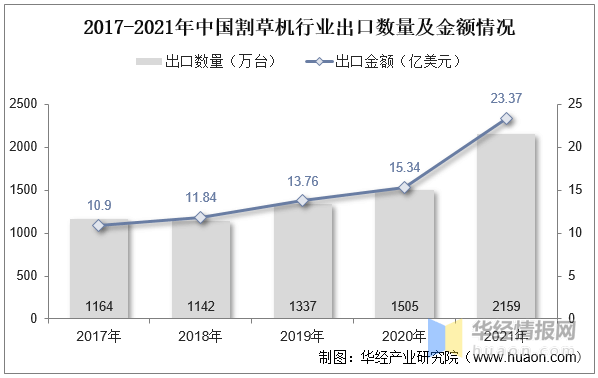
Judging from the export status of the domestic market, according to statistics, the export volume of China’s lawn mower industry in 2021 will be 21.59 million units, and the export value will be 2.337 billion US dollars. The export volume and export value will maintain a year-on-year growth trend.
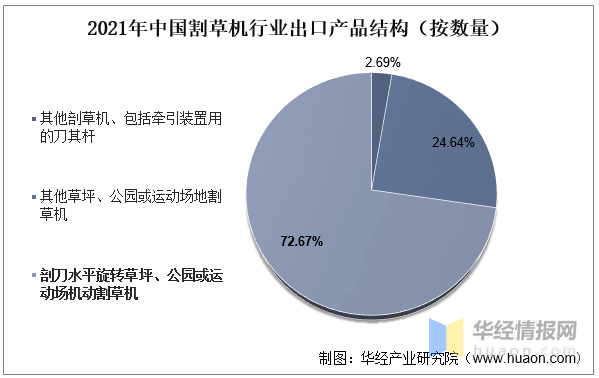
From the perspective of export product structure, products related to horizontal rotary lawn, park or sports ground mowers account for more than 70%. In 2021, the export volume of this product series will reach 15.69 million units, and the export value will be 1.894 billion US dollars.
Competitive landscape of lawn mower industry
From the perspective of market competition, overseas giants occupy a large share, and domestic manufacturers are rising rapidly. The top five garden machinery suppliers in the world are Husqvarna Group, Deere, Toro, MTD, and STIHL, with a combined share of 50% of the market that year. However, domestic manufacturers such as Chervon, Daye, Greebo and other enterprises have risen rapidly in the field of garden machinery.
The future development trend of lawn mower industry
From the perspective of various types of lawn mowers: gasoline remote control lawn mowers use traditional gasoline engines, which have the advantages of high power and good cutting effects. There are many limitations; AC lawn mowers are powered by AC motors, and the cost is low, but they need to be connected to a power source, which is poor in portability; DC electric power lawn mowers are powered by DC motors and rechargeable batteries as power sources Efficiency, low noise, energy saving and environmental protection and other advantages. Among them, lithium-ion DC lawn mowers use lithium-ion batteries as the power source, and generally use DC brushless motors. With the accumulation of technology in the lithium battery industry, lithium-ion lawn mowers are currently developing in the direction of high power, long battery life, and intelligence. , more in line with market demand.
The market segment of lawn mowers includes mowing robots, which is the main development direction in the future, but the overall penetration rate of the lawn mowing robot industry is low and is still in its infancy; there are still major pain points in some markets that have not been resolved, and the core functions of technology & products It is the main driving factor at the current stage; when the product performance is gradually improved to solve the pain points, the growth rate of the overall lawn mowing robot is far beyond this.

