
Lawn Mowers for Solar Power Plants Benefits in Photovoltaic Power Plants
Table of Contents
Maintaining the vegetation around photovoltaic (PV) power plants is crucial for ensuring optimal performance and efficiency. Overgrown grass and weeds can cast shadows on solar panels, reducing their ability to generate electricity. Traditionally, this maintenance has been done manually, but the use of remote-controlled lawn mowers is becoming increasingly popular due to their efficiency and cost-effectiveness. This article explores the benefits of using remote-controlled mowers in PV power plants, supported by data comparing them with manual labor.
Efficiency and Cost-Effectiveness
Remote-controlled lawn mowers offer significant advantages over manual mowing in terms of efficiency. A study conducted in 2023 found that using remote-controlled mowers in a 50 MW PV power plant reduced mowing time by 60% compared to manual labor. While a team of workers would take up to 10 days to mow a 100-acre area, a remote-controlled mower could complete the same task in just 4 days.
In terms of cost, remote-controlled mowers can lead to substantial savings. Manual mowing can cost up to $150 per acre when labor, equipment, and fuel are factored in. In contrast, the cost of operating a remote-controlled mower is approximately $60 per acre, leading to a 60% reduction in maintenance expenses.
Safety and Accessibility
Another key benefit of remote control lawn mowers is their ability to operate in challenging terrain, which is common in PV power plants. These mowers can easily navigate slopes and rough terrain, where manual mowing would be difficult and dangerous. In addition, remote-controlled mowers reduce the risk of accidents and injuries associated with manual mowing, particularly in high-temperature environments typical of solar farms.
Environmental Impact
Remote-controlled lawnmowers also offer environmental benefits. Unlike traditional mowers that rely on fossil fuels, many remote-controlled mowers are powered by electricity, often sourced directly from the solar panels they maintain. This reduces greenhouse gas emissions and aligns with the sustainability goals of PV power plants.
Comparison with Manual Labor
When comparing remote control lawnmowers to manual labor, the differences are striking:
- Time Efficiency: Remote-controlled mowers can reduce mowing time by 60%.
- Cost Savings: Maintenance costs can be reduced by 60% when using remote-controlled mowers.
- Safety: Remote-controlled mowers eliminate the risks associated with manual labor in challenging terrain and high temperatures.
- Environmental Impact: Remote-controlled mowers have a lower carbon footprint, especially when powered by solar energy.
Conclusion
The use of remote controlled lawn mowers in photovoltaic power plants offers numerous benefits, including improved efficiency, cost savings, enhanced safety, and reduced environmental impact. As solar energy continues to grow in importance, the adoption of remote-controlled mowers in PV power plants is likely to increase, contributing to more sustainable and cost-effective solar energy production.
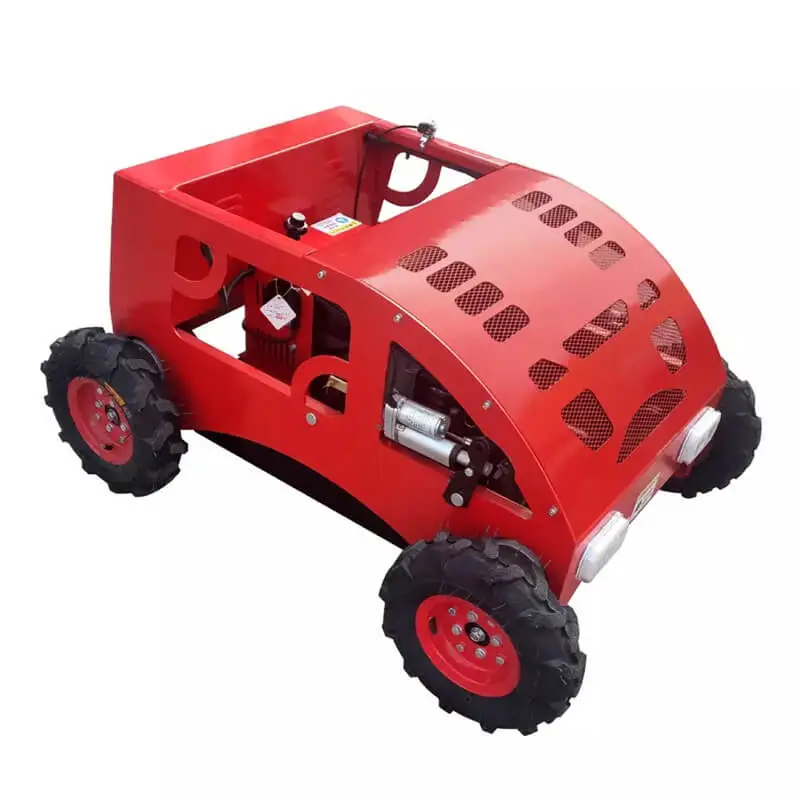
Check out our latest remote-controlled lawn mower products,
Read our blog on lawn mower maintenance and usage tips.
Recent Posts
Here, You can learn more information about RC lawn mowers.

Recent Posts


$1,050.00 – $1,300.00Price range: $1,050.00 through $1,300.00
$1,700.00 – $2,000.00Price range: $1,700.00 through $2,000.00

$3,600.00 – $4,400.00Price range: $3,600.00 through $4,400.00
