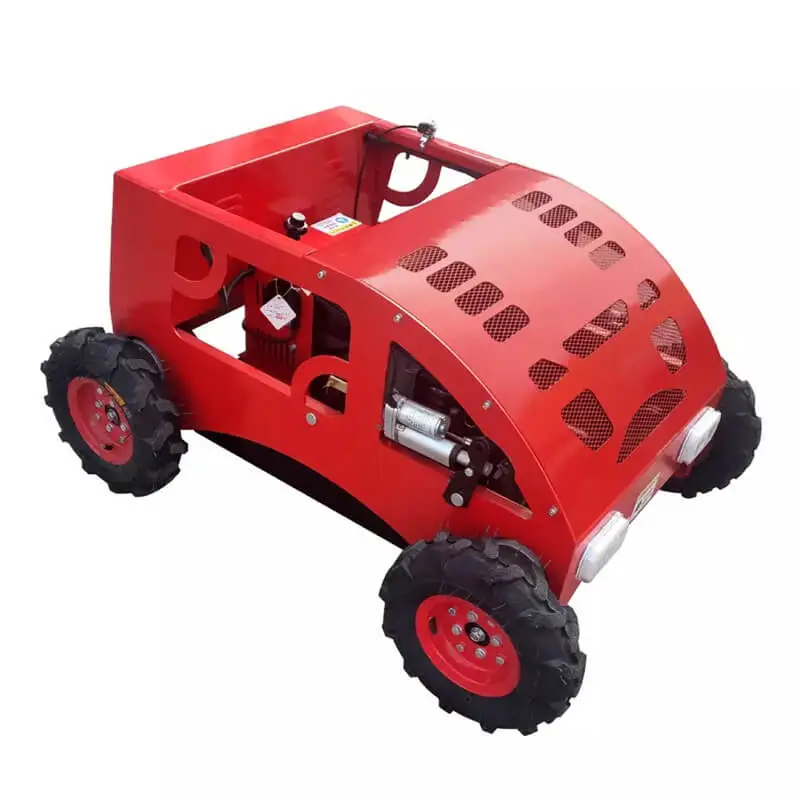
Robotic lawn mowers have grown in popularity due to their convenience, energy efficiency, and potential for reducing labor costs. However, like any technological innovation, they come with certain disadvantages that may limit their widespread adoption. This article explores these disadvantages, supported by data and theoretical evidence.
High Initial Cost of RC Lawn mower
One of the primary disadvantages of robotic remote control lawn mowers is their high initial cost. Compared to traditional push or ride-on mowers, robotic models are significantly more expensive. According to a market analysis by Statista, the average cost of a robotic lawn mower in 2023 was around $1,000 to $3,000, while traditional gas-powered mowers typically range from $300 to $800. This steep price point can be a barrier for many homeowners, especially those with smaller lawns who may not see a return on investment in the short term.
Limited Performance on Complex Terrains
Robotic lawn mowers often struggle with complex terrains, including steep slopes, uneven ground, and areas with numerous obstacles. While advanced models are equipped with sensors and mapping technologies to navigate these challenges, their performance can still be inconsistent. A study published in the Journal of Outdoor Power Equipment found that robotic mowers had difficulty maintaining consistent cutting patterns on slopes greater than 20 degrees and required frequent manual intervention in heavily landscaped gardens. This limitation makes them less suitable for properties with intricate landscaping. View our blog
Dependence on Weather Conditions
Remote control lawn mower Maintenance and Repair Complexity
Robotic lawn mower Security and Privacy Concerns
As with many smart home devices, robotic lawn mowers are vulnerable to security and privacy risks. These mowers often connect to home Wi-Fi networks, and any vulnerabilities in their software can be exploited by hackers. A report by Kaspersky Lab highlighted that some models of robotic lawn mowers could be hacked to track their owners’ movements or even gain access to other connected devices in the home. Additionally, the theft of robotic mowers is a concern, as their compact size and high value make them attractive targets for criminals. While some models include anti-theft features, such as GPS tracking, these measures are not foolproof..